
Blockchain and Digital Badges

Many face to face classrooms use reward systems and acknowledge progress, which can be hard to attribute to learners when online. Digital applications like Edmodo are frequently used in schools by teachers to encourage specific behaviours such as peer interaction or completing homework (Cheng, Watson, & Newby, 2018, pp. 191, 192; Gibson, Ostashewski, Flintoff, Grant, & Knight, 2015, p. 405). Similarly, like many teachers create a classroom currency, block-chain can use a form of currency to place a value on an achievement which can be utilised to ‘buy’ a specific item or create an exchange for something the learner may need in their learning progress (Chen, Xu, Lu, & Chen, 2018, pp. 2, 6). As learning is becoming more online, the ability for rewards systems to be digitalised is useful, but to use these tools only for this would have little benefit to learning.

The greater benefit of digital badges is they can also support pedagogy. For example, digital badges can be awarded to learners for holding specific skills and knowledge content (Cheng, Watson, & Newby, 2018, p. 191; Gibson, Ostashewski, Flintoff, Grant, & Knight, 2015, pp. 406, 408), which can be help identify them by other learners when trying to form collaborative groups in learning settings such as communities of practice, project-based learning or games based learning (Gibson, Ostashewski, Flintoff, Grant, & Knight, 2015, pp. 407, 408). In addition, it can be used as an effective feedback tool (Cheng, Watson, & Newby, 2018, p. 193) similar to a rubric, identify what students can achieve, and the level they can achieve it, and what they still need to do (Cheng, Watson, & Newby, 2018, pp. 191, 192, 193; Gibson, Ostashewski, Flintoff, Grant, & Knight, 2015, p. 407).

Blockchain security both a positive and a risk. Whilst block-chain is promoted as being highly secure do to its structure and ability to identify authorship and access (Chen, Xu, Lu, & Chen, 2018, pp. 3, 4, 5, 9; Gong, Liu, & Jing, 2018, pp. 2393-2394; Ma & Fang, 2020, pp. 22-23, 24), its openness to be access by anyone as well as its purpose for storing all data in one collection makes it an ideal target for gleaning information (Ma & Fang, 2020, p. 26). The other issue about its ability to collate and exchange data is this method is less personal (Chen, Xu, Lu, & Chen, 2018, p. 8; Ma & Fang, 2020, pp. 25, 27). Being a crypto-currency tool (Chen, Xu, Lu, & Chen, 2018, p. 1; Gong, Liu, & Jing, 2018, p. 2391), using it for education establishes a perspective that knowledge is a currency, reinforcing the concept that learning is for commercial value, rather than being learner centric.

Many other alternatives to bitcoin that offer similar benefits but are more personable. Block-chain still requires information to be stored on a server (Chen, Xu, Lu, & Chen, 2018, p. 4; Ma & Fang, 2020, p. 24), so for the learner, it makes little difference to using a cloud-based system. Platforms like Google allow for the learner to utilise the same features as Blockchain, but with additional features that allow for synchronous and asynchronous communication (Google, n.d.), making learning a lot more personal and collaborative (therefore more aligned with contemporary pedagogy).

Arguably, block-chain may be innovative and offer a range of digital features, but in terms of learning design has little to endorse it that cannot be offered elsewhere with more features. Digital badges however, whilst many may view as having little to offer other than an extrinsic reward system, with proper utilisation can support a range of effective pedagogical practices for online learning.

References

Chen, G., Xu, B., Lu, M., & Chen, N.-S. (2018). Exploring blockchain and its potential applications for education. Smart Learning Environments, 5(1), 1-10. doi:10.1186/s40561-017-0050-x

Cheng, Z., Watson, S. L., & Newby, T. J. (2018). Goal Setting and Open Digital Badges in Higher Education. TechTrends, 62(2), 190 – 196. doi:10.1007/s11528-018-0249-x

Gibson, D., Ostashewski, N., Flintoff, K., Grant, S., & Knight, E. (2015). Digital Badges in Education. Education and InformationTechnologies, 20(2), 403 – 410. doi:10.1007/s10639-013-9291-7

Gong, X., Liu, X., & Jing, S. (2018). Parallel-Education-Blockchain Driven Smart Education: Challenges and Issues. 2018 Chinese Automation Congress (CAC), (pp. 2390 – 2395). doi:10.1109/CAC.2018.8623198

Google. (n.d.). Working together with G Suite. Retrieved from G Suite: https://gsuite.google.com/

Ma, Y., & Fang, Y. (2020). Current Status, Issues, and Challenges of Blockchain Applications in Education. International Journal of Emerging Technologies in Learning, 15(12), 20 – 31. doi:10.3991/ijet.v15i12.13797

Social Media and Education

Social media, encompassing networking, publishing, content sharing, virtual and gaming networking, holds value in enhancing education, but must not be used carte blanche. By understanding what social media can offers in terms of learning enhancement we can understand its value post-education (Mao, 2014, pp. 213, 214).

Technology is rapidly developing and changing the way society interacts and functions (Mao, 2014, p. 213); as indicated by the increasing interaction students have with social media (Kelling, Kelling, & Lennon, 2013, p. 2658). We know learners engage more if they deem something relevant (Kelling, Kelling, & Lennon, 2013, p. 2658): Social media provides learners with engagement, collaboration and interaction with their learning experience, allowing students to engage and work with others in a way they find meaningful and relevant (Heavin & Neville, 2012, pp. 195, 200; Mao, 2014, pp. 213, 222). Using social media motivates students to learn, improve attitudes, whilst making theoretical content more understandable, all key to successful learning improving performance outcomes (Heavin & Neville, 2012, pp. 194, 200; Mao, 2014, pp. 213, 214).

Using social media like Chatterpix can engage younger learners by making learning fun, and help shy or anxious students vocalise information.
https://www.youtube.com/watch?v=MHReu6vJ08M&feature=youtu.be

Furthermore, social media capabilities enhance learning throughs its range of tools and functions, providing a plethora of information via access to a range of information, organisations, experts and data in a much smaller timeframe and less cost than traditional teaching and learning (Heavin & Neville, 2012, pp. 194, 195; Kelling, Kelling, & Lennon, 2013, pp. 2657, 2658). Traditional concepts of experts are being replaced with the ability to use the internet as well as drawing on peer learning (Kelling, Kelling, & Lennon, 2013, p. 2657; Mao, 2014, p. 222). In addition to the changing nature of learning,businesses are quickly adopting social media as the nature of workplaces  are changing and becoming less face to face (Heavin & Neville, 2012, p. 200; Kelling, Kelling, & Lennon, 2013, pp. 2656, 2663). It is important as educators that we provide learners with the knowledge and skills they require (Heavin & Neville, 2012, p. 194), consequently integrating social media will ensure learners are in the best position to succeed (Heavin & Neville, 2012, pp. 195, 200).

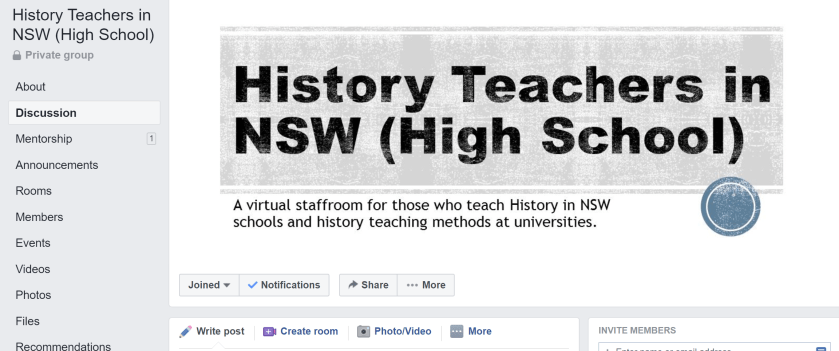
Using social media platforms like Facebook can allow collaboration and the ability to share ideas and expertise

There are still some concerns about social media use in education. Using social media will not necessitate an improvement in education, and it is noted that social media is primarily not designed as a pedagogical tool, but rather for social and commercial purposes (Heavin & Neville, 2012, p. 200; Mao, 2014, p. 221). Also, whilst research indicates that student attitudes towards social media in education are highly positive, there is some reluctance from educators to utilise social media, who prefer to utilise traditional teaching methods and find that social media is contrary to teaching ideologies, moving away from the concept of the teacher as the educator (Mao, 2014, pp. 214, 215, 220, 222).  If we are to utilise social media effectively into education, we need to ensure that it aligns with effective pedagogical theory and practise (Heavin & Neville, 2012, p. 194; Mao, 2014, p. 222).  Rather than replacing contemporary teaching and learning, we need to align effective pedagogy with contemporary need. Research indicates there is value in using social media tools in education (Heavin & Neville, 2012, p. 199), but educators must carefully critique and evaluate social media tools in terms of how it will enhance their practice, rather that replace it (Heavin & Neville, 2012, p. 195; Mao, 2014, p. 222). At the same time, it is important that educators recognise the value of student input into effective teaching and learning and move away from teacher-centric education. Students need to be considered as an equal partner in education with value placed on the perspectives and influences they have to offer (Mao, 2014, pp. 213, 222).

When used appropriately, social media can greatly enhance learning. As society is progressing and relying more on social media for education and communication, we need to integrate it into education to ensure skill and knowledge development.

References

Heavin, C., & Neville, K. (2012). Using Social Media Technology as an Educational Tool. Proceedings of the European Conference on Games Based Learning, (pp. 194-201).

Kelling, N. J., Kelling, A. S., & Lennon, J. F. (2013). The tweets that killed a university: A case study investigating the use of traditional and social media in the closure of a state university. Computers in Human Behaviour, 29, 2656-2664. Retrieved from http://dx.doi.org/10.1016/j.chb.2013.06.044

Mao, J. (2014). Social Media for learning: A mixed methods study on high school students’ technology affordances and perspectives. Computers in Human Behaviour, 33, 113-223. Retrieved from http://dx.doi.org/10.1016/j.chb.2014.01.002